



Do you wonder what is the scientific truth behind current society topics? Are you curious how people’s trust in homeopathic practices can be explained? How does the TikTok algorithm function? What are the controversies regarding vaccination, climate change or women’s representation in science? The “SKEPSIS” series invites you to explore, from a sociology point of view, the less visible areas of subjects that influence our day-to-day life, when our health, identity or future are at risk. #find out
Launched in October 2023, the “SKEPSIS” series explores the profound structures that influence our ways of perceiving and acting.
The “SKEPSIS” series aims to present, in a captivating and dynamic manner, certain subjects relevant for contemporary society, such as vaccination, climate change, social media algorithms or artificial intelligence. The project raises new challenges regarding controversial topics and also presents the tactics that people use to legitimate counter-scientific narratives.
The “SKEPSIS” project addresses the large audience, and the guests of the series are professors and doctoral students of the University of Bucharest.
The video content is pre-recorded in technological conditions that ensure a high-quality content. The format of the episodes includes the presentation of the theme, followed by a dialogue between a moderator and a guest.
The video content in this section is produced by the Communication and Public Relations Department of the University of Bucharest, and research results are part of the program “SKEPSIS – Fabricating uncertainties regarding vaccination and climate change. Comparative study of legitimacy in two counter-science narratives”, implemented by the University of Bucharest and financed by the Ministry of Research, Innovation and Digitalization, Romania, PN-III-P4-ID-PCE-2020-1589.

26.03.2024
This episode invites us to better understand the way in which attitudes regarding vaccination are constructed in society. Are the controversies around this subject recent, influenced by the Covid-19 pandemic? Or are they older? At the same time, what historical moments have influenced attitudes regarding vaccination? Not lastly, what are the main causes of skepticism in what concerns vaccines?
27.02.2024
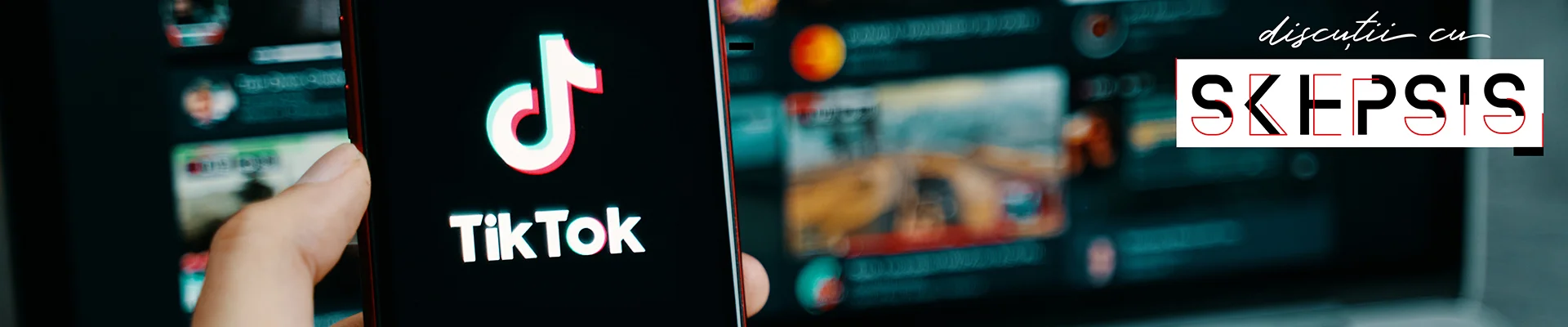
This episode explains how algorithms, sets of computer generated rules, decide what information or contents are displayed to users on social media networks, and the manner in which they contribute to the customization of online activity. How transparent are social media when it comes to algorithms? Moreover, are users aware of the activity of algorithms?

30.01.2024
In the fourth episode of the “SKEPSIS” series, PhD Alexandra Hosszu, graduate of the Doctoral School of Sociology of the UB, and PhD student Diana Moga, from the same institution, propose a sociological perspective about social inequalities in the educational field, a very relevant subject especially in the context of the Covid-19 pandemic, which accelerated digitalization in education, raising questions on the impact of this transformation.

19.12.2023
In the last decades, homeopathy has won over patients around the world as a natural alternative to traditional medicine. Whilst homeopathy is often the subject of heated debates in the medical community, people sometimes give it credit and try this alternative approach too. But what makes homeopathy appealing in certain circumstances when man is suffering? How can one explain people’s trust in homeopathic practices?

| Latest news
In the 6th episode of the SKEPSIS series, professor Cosima Rughiniș, PhD, teaching staff at the Faculty of Sociology and Social Work of the University of Bucharest, and PhD student Diana Moga from the UB Doctoral School in Sociology, propose a discussion on the attitudes regarding vaccination.
In episode 5 of the “SKEPSIS” series, PhD student Dragoș Obreja from the Doctoral School of Sociology of the University of Bucharest, and associate professor Ștefania Matei, PhD, teaching staff at the Faculty of Sociology and Social Work, propose an up-to-date discussion about the role of social media algorithms and the way in which they contribute to the customization of users’ activity.

